Electric Floor Scrubber: Types & Buying Guide | EPEXLIFT

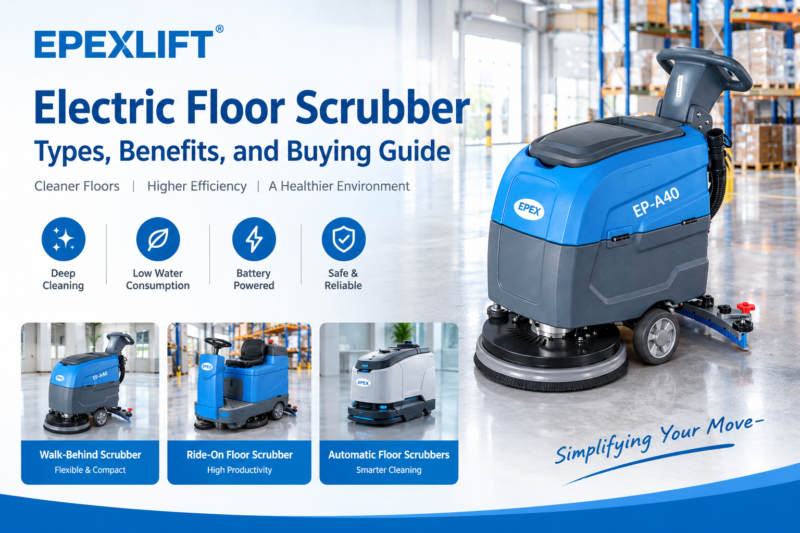
Electric Floor Scrubber: Types, Benefits, and Buying Guide
Keeping floors clean is essential for warehouses, factories, shopping malls, supermarkets, and commercial buildings. Traditional mopping can be time-consuming and labor-intensive, especially when cleaning large areas every day. An electric floor scrubber provides a more efficient solution by combining mechanical scrubbing, water distribution, and wastewater recovery in one machine.
Today, businesses can choose from different types of floor cleaning equipment, including walk-behind scrubbers, ride-on floor scrubbers, and automatic floor scrubbers. Each type offers different advantages depending on the cleaning area, floor conditions, and operational requirements.
In this guide, we will explain how a floor scrubber machine works, compare the main types, and help you choose the right equipment for your business.
1. What Is an Electric Floor Scrubber?
An electric floor scrubber is a powered cleaning machine designed to remove dirt, stains, and residue from hard floor surfaces. Unlike traditional cleaning methods, it uses rotating brushes or pads to scrub the floor while a vacuum system collects dirty water.
A typical floor scrubber machine includes several important components:
- Scrubbing brushes: Remove dirt and stains from the floor.
- Solution tank: Holds clean water and cleaning detergent.
- Recovery tank: Collects dirty water during cleaning.
- Squeegee system: Helps guide wastewater toward the vacuum system.
- Vacuum motor: Removes dirty water from the floor.
- Battery system: Provides power for cordless operation.
Electric floor scrubbers are suitable for many environments, including warehouses, factories, offices, hospitals, schools, and retail stores. Depending on the model, they can clean concrete, epoxy, vinyl, ceramic tile, and other compatible hard surfaces.
By combining scrubbing and water recovery, these machines help improve cleaning efficiency and reduce the amount of water left on the floor.
2. Walk-Behind Scrubber: Flexible Cleaning for Smaller Areas
A walk-behind scrubber is operated by an employee walking behind the machine. It usually features a handle or control panel that allows the operator to manage the cleaning process.
This type of electric floor scrubber is ideal for small and medium-sized areas, particularly where narrow aisles, furniture, shelving, or other obstacles require precise maneuvering.
Benefits of Walk-Behind Scrubbers
- Compact design for easier storage.
- Excellent maneuverability in confined spaces.
- Suitable for routine commercial and industrial cleaning.
- Lower initial investment than many larger machines.
- Available in different cleaning widths and battery configurations.
Common applications include supermarkets, restaurants, offices, schools, workshops, and small warehouses.
When selecting a walk-behind scrubber, consider the cleaning width, battery runtime, tank capacity, and machine dimensions. A compact model may be the best choice for crowded areas, while a wider model can improve productivity in more open spaces.
Walk-behind machines are also a practical option for businesses that need reliable cleaning equipment without investing in a large ride-on model.
3. Ride-On Floor Scrubber: Higher Productivity for Large Areas
A ride-on floor scrubber allows the operator to sit on the machine while cleaning. It is designed for large facilities where cleaning speed and productivity are important.
Compared with walk-behind models, ride-on floor scrubbers generally feature wider cleaning paths, larger tanks, and higher potential cleaning productivity.
Benefits of Ride-On Floor Scrubbers
- Efficient cleaning of large floor areas.
- Reduced operator fatigue during long cleaning shifts.
- Larger solution and recovery tanks on many models.
- Fewer interruptions for refilling and wastewater disposal.
- Suitable for demanding commercial and industrial applications.
Ride-on floor scrubbers are widely used in logistics centers, manufacturing plants, distribution warehouses, airports, shopping malls, and exhibition halls.
For example, a large warehouse with extensive concrete flooring may benefit from a ride-on machine because it can cover a wide area efficiently. This can help reduce cleaning time and improve the use of labor resources.
Before purchasing a ride-on floor scrubber, evaluate its turning radius, cleaning width, tank capacity, battery performance, and ability to operate safely around forklifts, pedestrians, and storage racks.
For facilities with extensive open floor space, a ride-on model can be a valuable long-term investment.
4. Automatic Floor Scrubbers: A Smarter Cleaning Solution
Automatic floor scrubbers help simplify floor cleaning by automating certain machine functions. Depending on the design, this term can describe conventional scrubbers with automatic operating features or autonomous robotic cleaning machines.
Conventional automatic models may offer simplified controls, automatic water adjustment, or preset cleaning functions. Autonomous floor scrubbers use navigation systems, sensors, and obstacle detection to follow designated cleaning routes with limited human intervention.
Advantages of Automatic Floor Scrubbers
- Consistent cleaning routines.
- Reduced manual work for suitable applications.
- Improved labor allocation.
- Repeatable cleaning routes on supported models.
- Potential productivity improvements in large facilities.
Automatic floor scrubbers are increasingly considered for warehouses, factories, commercial buildings, and other environments with regular cleaning schedules.
However, not every automatic floor scrubber is fully autonomous. Buyers should confirm the machine’s navigation capabilities, safety features, charging requirements, and level of operator supervision before making a decision.
The right solution depends on the facility layout, floor conditions, cleaning frequency, and available budget.
5. Why Choose an Electric Floor Scrubber?
An electric floor scrubber offers several advantages for businesses that need consistent and efficient floor cleaning.
Improved Cleaning Performance
Mechanical brushes provide consistent scrubbing action to remove dirt and everyday stains. Combined with a wastewater recovery system, they can deliver more effective results than manual mopping in many applications.
Reduced Labor Requirements
A floor scrubber machine can help employees clean larger areas in less time. This allows cleaning teams to focus on other maintenance tasks and may reduce overall labor requirements.
Better Water Recovery
The squeegee and vacuum system collect dirty water during operation, helping leave the floor cleaner and reducing standing water. Actual drying time depends on the floor surface, machine settings, and cleaning conditions.
Convenient Battery Operation
Battery-powered electric floor scrubbers operate without trailing power cables. This makes them convenient for warehouses, factories, supermarkets, and other environments where operators need freedom of movement.
Depending on the model, buyers may choose lead-acid or lithium batteries. Lithium batteries can offer faster charging and reduced routine battery maintenance, while lead-acid batteries may provide a lower initial purchase cost.
Versatile Applications
With suitable brushes, pads, and cleaning solutions, electric floor scrubbers can support a wide range of commercial and industrial cleaning tasks.
6. How to Choose the Right Floor Scrubber Machine
Selecting the right floor scrubber machine requires careful consideration of your facility’s cleaning requirements.
Cleaning Area and Machine Type
For smaller spaces and narrow aisles, a walk-behind scrubber is often a practical option. For large warehouses and factories, a ride-on floor scrubber may provide higher productivity. Automatic floor scrubbers may suit facilities with repetitive cleaning routes.
Cleaning Width and Productivity
A wider cleaning path can help cover more floor area in each pass. However, a narrower machine may be easier to maneuver around shelves, equipment, and obstacles.
Consider both the manufacturer’s stated cleaning rate and the expected real-world performance. Turning, refilling, and obstacle avoidance can affect actual productivity.
Tank Capacity
The solution tank stores clean water, while the recovery tank collects wastewater. Larger tanks can reduce interruptions during extended cleaning operations, while smaller tanks may suit compact facilities.
Battery Runtime and Charging
Check battery capacity, expected operating time, charging duration, and charger compatibility. Make sure the machine can meet your cleaning schedule and determine whether an additional battery is necessary for multiple shifts.
Floor Type and Dirt Conditions
Different surfaces require suitable brushes or pads. Smooth epoxy, textured concrete, and ceramic tile may need different cleaning approaches.
If your facility has oil, grease, or heavy industrial dirt, confirm that the machine and cleaning solution are appropriate for those conditions.
Maintenance and Spare Parts
Check the availability of brushes, squeegees, filters, batteries, and other replacement parts. Reliable technical support and clear maintenance instructions can help reduce downtime and long-term operating costs.
7. What to Consider When Buying a Floor Scrubber New
If you are searching for a floor scrubber new, compare specifications and operating costs rather than focusing only on the initial price.
Before purchasing, ask your supplier for:
- Detailed product specifications and machine dimensions.
- Cleaning width and estimated cleaning productivity.
- Solution and recovery tank capacities.
- Battery type, runtime, and charging requirements.
- Brush and squeegee specifications.
- Warranty terms and maintenance recommendations.
- Spare parts availability and technical support.
- Packaging, shipping costs, and delivery lead time.
For equipment distributors and OEM buyers, branding options, minimum order quantities, and long-term product support may also be important.
Comparing these factors helps you identify a floor scrubber machine that matches your budget and operational requirements.
8. EPEXLIFT Floor Cleaning Equipment
EPEXLIFT provides material handling and industrial equipment solutions, including floor cleaning equipment for commercial and industrial applications.
Our floor scrubber range can help businesses explore suitable cleaning machines for different facility sizes and operating environments. Whether you need a compact walk-behind scrubber for smaller spaces or a productive ride-on floor scrubber for a large warehouse, selecting the right specifications is essential.
When evaluating equipment, our team can help you compare machine configurations, cleaning capacity, battery options, and application requirements.
For distributors and business buyers, choosing a suitable supplier also means considering spare parts availability, product consistency, technical documentation, and after-sales support.
Contact EPEXLIFT to discuss your cleaning requirements and explore floor scrubber solutions for your business.
9. Frequently Asked Questions
What is the difference between a walk-behind and a ride-on floor scrubber?
A walk-behind scrubber is operated by an employee walking behind the machine and is suitable for smaller or more congested areas. A ride-on floor scrubber allows the operator to sit while cleaning and is generally better suited to larger facilities.
Are electric floor scrubbers suitable for warehouses?
Yes. Electric floor scrubbers are widely used in warehouses with compatible hard flooring. The ideal model depends on the floor area, aisle width, dirt conditions, and cleaning frequency.
How long does a battery-powered floor scrubber operate?
Operating time varies according to battery capacity, machine design, floor conditions, and cleaning settings. Check the manufacturer’s specifications to determine whether the machine can complete your required cleaning shift.
Are automatic floor scrubbers fully autonomous?
Not always. Some machines automate cleaning functions but still require an operator. Autonomous models use navigation technology to follow cleaning routes with limited human intervention.
How do I choose the best floor scrubber machine?
Evaluate the cleaning area, floor type, cleaning frequency, machine size, tank capacity, battery performance, and maintenance requirements. Comparing these factors will help you select equipment that delivers suitable cleaning performance and long-term value.
Conclusion
An electric floor scrubber is an effective solution for improving floor cleaning efficiency in commercial and industrial facilities. Walk-behind scrubbers provide flexibility, ride-on floor scrubbers offer higher productivity for large areas, and automatic floor scrubbers can simplify repetitive cleaning tasks.
When choosing a floor scrubber machine, consider cleaning performance, battery options, tank capacity, maintenance, and supplier support.
If you are looking for a floor scrubber new for your warehouse, factory, or commercial facility, contact EPEXLIFT to explore suitable floor cleaning equipment for your business.